plancia
One board for every task Claude Code and Codex have open, a spoken daily recap, and one place to send the work back. No account, no telemetry.
langPythonlicenseGPL-3.0
PhD Student in Information and Communication Technology
I am a PhD researcher at the University of València, working on how generative models behave inside virtual environments. Before that I spent two years on VR interaction and user experience, running studies with real participants.
Alongside the research I write small tools and put them on GitHub. They run on a laptop, they keep their data local, and each one is documented here.
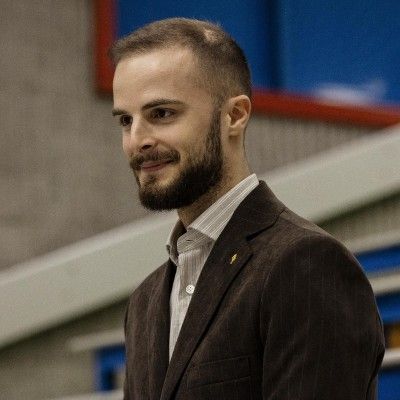
Tools I use myself. Each has a documentation page built from its own README.
One board for every task Claude Code and Codex have open, a spoken daily recap, and one place to send the work back. No account, no telemetry.
Move a live coding conversation between Claude Code and Codex as a native resumable session, in both directions.
Voice memo in, speaker labelled document out. Runs whisperX and pyannote locally, and remembers who is who next time.
A queue for heavy jobs launched by parallel Claude Code sessions on one machine. An AI judge orders the queue; a deterministic layer guarantees nobody starves.
A local queue for yt-dlp on Mac, Windows and Android. One queue, one window, and no code to get around protections.
A Claude Code plugin for shipping static sites and auditing the one that is actually live.
2025 17th International Conference on Quality of Multimedia Experience (QoMEX), Madrid, Spain
VII Congreso Internacional de Humanidades Digitales Hispánicas (HDH), València, Spain, 22-24 Oct. 2025. ISBN 978-84-9133-830-7
A third paper on VR interfaces and interaction methods is in revision. The full record is on the CV.
Testing an LLM job scheduler against hostile input, what the failing case looked like, and why the number stayed in the README.
Four of these tools do the work on one machine with no account behind them. Here is what that constraint costs, in seconds, in gigabytes, and in things a cloud service would get for free.